

June is Men’s Health Month, which is an opportunity to raise awareness and education for health issues impacting men.
NORFOLK, Va. — Heart disease is one of the leading causes of death for men, and one man hopes his story will inspire others to stay on top of their health.
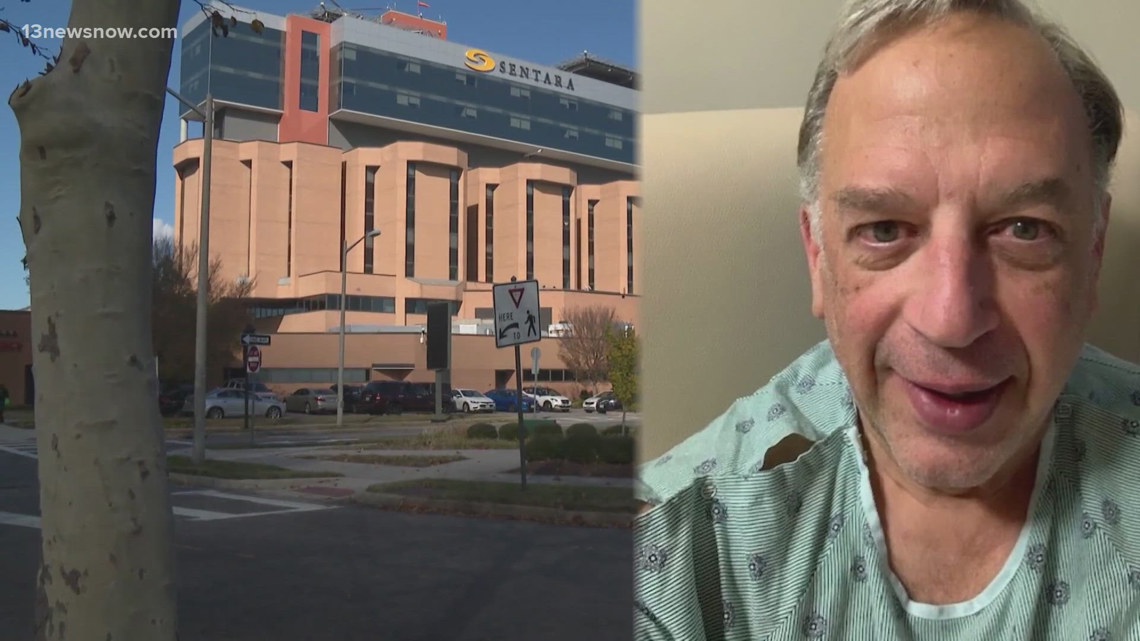
Last summer, Jay Mitchell started having issues during his after-dinner walks. “And I’d get a few blocks from the house, and I feel like I was having indigestion. I just didn’t feel right,” said Mitchell.
That happened at least six times over the next few months. Then in September, he woke up in the middle of the night with that same feeling, only this time, it wouldn’t go away.
“Finally I said, ‘You know, I think I need to go to the ER,'” he recalled.
It wasn’t long before doctors at Sentara Health figured out the problem.
“He’s got my shirt off and got all the electrodes on, and he’s working on it, and he goes, ‘You’re in luck!'” Mitchell said. “And his eyes got all big, and I said, ‘Why?’ And he says, ‘Oh, because we can fix it!'”
Cardiologist Dr. Manik Veer is a part of a new advanced imaging team at Sentara Norfolk General Hospital.
designed to check a patient’s heart as minimally invasive as possible.
“Health is paramount. It’s always better to be safe,” said Dr. Veer.
There are four members on the advanced imaging team as they work to build up the program.
“In the past, we didn’t have the technology to do CT scans of the heart because it’s very technologically challenging. Now we do. So now patients can know their heart condition by a non-invasive CT scan,” said Veer.
Veer said it’s so important to call a doctor when there are health concerns, or even better, before problems arise.
“I think guys understand cars much better. You don’t want to go to the mechanic when you’re stuck on the freeway. You want to go to the mechanic before you head on a long trip,” he said. “That’s exactly how I view life, and just one visit a year for prevention can go a long way to keeping you healthy in the long run.”
After undergoing triple bypass surgery, Mitchell started rehab through Sentara Health and is feeling much better. He learned many lessons on his road to recovery.
“Listen to your body, pay attention to what’s going on, and don’t be afraid to ask the questions that are necessary,” said Mitchell.
Mitchell’s father had a heart attack at the age of 37 and underwent open heart surgery in his 70s. He advises people to pay attention to their family history.
Veer added that some issues are hereditary, and patients will need help from doctors. However, some factors can help lower the risk of heart disease, including improving diet and exercise, and stopping smoking.
For men, some signs of heart trouble could be a gripping or tightening feeling in the chest. Atypical symptoms also include shortness of breath, fatigue, and dizziness.
link