

Researchers used data from two large, national epidemiological studies collected between 2000 and 2020: 13,073 participants between the ages of 25 and 105 in the United States-based Health and Retirement Study, which is supported by the National Institutes of Health’s National Institute on Aging (NIA) and the Social Security Administration, and 8,311 participants between the ages of 45 and 97 in the South Korean-based Korean Longitudinal Study of Aging.
Data on age-related health outcomes was collected from participants in each study every two years over an approximately 12-year period. During each wave of data collection, participants self-reported on a multitude of health outcomes, including loneliness and incidents of CVD.
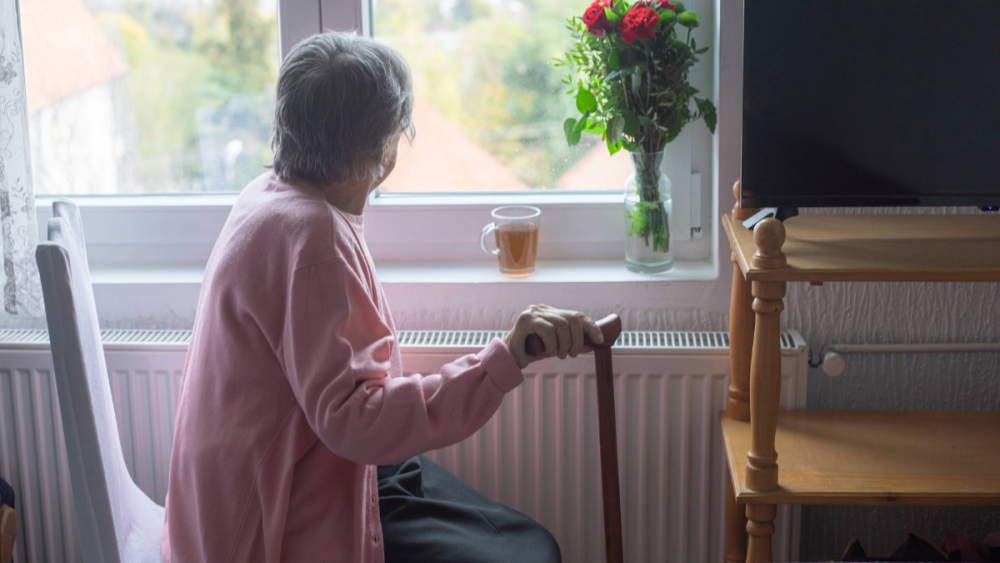
In both countries, participants who identified as lonely were approximately 15% more likely to report an incident of CVD.
While the impact of loneliness on CVD was similar in both countries, the behavioral pathways between loneliness and CVD differed slightly. The researchers examined physical activity, alcohol consumption and smoking as mediators between loneliness and CVD. In both South Korea and the United States, people who experienced loneliness were less physically active and consumed more alcohol, which contributed to their higher rates of heart disease. Smoking played a role only in the United States, where there were nearly 20% more participants who had a history of smoking.
According to Lee, this difference in the behavioral pathways to loneliness suggests that prevention efforts in clinical settings and public policies could be adapted to cultural differences. However, preventing feelings of loneliness can also be intuitive, he said.
“Meeting people and actively engaging in relationships is an obvious way to prevent loneliness,” Lee said. “Calling family and friends, scheduling lunch or coffee — while these things may seem small, they are the most basic, intuitive, and often most effective ways to reduce feelings of isolation and loneliness — and, in this case, decrease risk of CVD.”
For Lee, one of the strengths of this study is the potential to reach conclusions about what it means to be human, rather than about one specific culture or group.
“By analyzing data from two large, population-based cohorts — one in South Korea and one in the United States — we’re able to move beyond localized perspectives and conclusions and capture patterns that may be fundamental to human life,” Lee said.
Ruijia Chen of the Boston University School of Public Health and Sakurako Okuzono and Laura Kubzansky of the Harvard T.H. Chan School of Public Health also contributed to this research.
NIA funded this research.
At Penn State, researchers are solving real problems that impact the health, safety and quality of life of people across the commonwealth, the nation and around the world.
For decades, federal support for research has fueled innovation that makes our country safer, our industries more competitive and our economy stronger. Recent federal funding cuts threaten this progress.
Learn more about the implications of federal funding cuts to our future at Research or Regress.
link