


Author’s note: Since this interview was conducted, Jennifer Loo has left her position at Tala.
Jennifer Loo is the CFO of Tala, the first financial platform for the Global Majority. Its leading money app bridges digital and cash ecosystems to deliver instant access to credit, payments, savings, and transfer services to millions of customers on three continents. Powered by advanced technology and human creativity, Tala is reinventing financial infrastructure to solve what legacy institutions can’t or won’t, in order to unlock global economic progress. Tala has raised nearly half a billion dollars in investments and debt, backed by leading venture and impact investors including Upstart, the Stellar Development Foundation, RPS Ventures, the J. Safra Group, IVP, Revolution Growth, Lowercase Capital, and PayPal Ventures. Tala has been named to Fortune’s Impact 20, CNBC’s Disruptor 50 list four years in a row, and Forbes’ Fintech 50 list for eight consecutive years.
Jennifer and I recently connected to discuss what it takes to lead a mission-led, fast-growing fintech company, revolutionizing access to financial services, why CFO often stands for Chief Flexibility Officer, and much more.
—

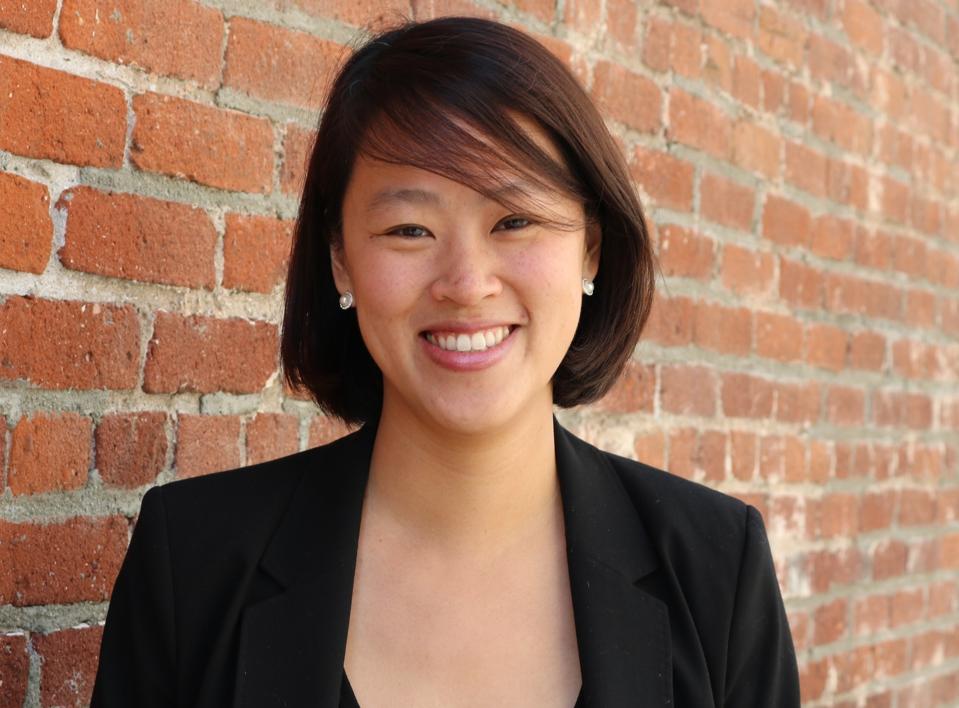
Jennifer Loo, former CFO of Tala, believes the modern CFO role could stand for ‘Chief Flexibility Officer.
Jennifer Loo
When Jennifer Loo attended the University of Berkeley as an undergrad, she was driven by curiosity. Her first paying job was a copy editor for the university’s student newspaper, The Daily Californian, and she excelled in her studies as a dual major in business administration and economics.
Post-graduation, she received a law degree from the New York University School of Law and completed the University of Berkeley’s MBA for Executives program.
Loo’s education exemplifies a dedication to success, a desire to learn, and a consistent pursuit of excellence–qualities that have served her well throughout her career. Her unique background also sets her apart from fellow CFOs.
“Something that many people may not know about the CFO job is that it’s closely tied to legal matters,” Loo explained. “I have either managed the legal department or very closely partnered with it. The best legal partners are those who are very business-minded. General Counsels can’t be afraid of numbers because a lot of what they will be doing in-house involves how to drive the business forward and how to find the best economics in a partnership or deal.”
This combination of finance and law proved useful at LegalZoom, the first place where Loo cut her financial teeth. She started as a financial analyst in 2009 and took on additional responsibilities during her tenure to eventually serve as Vice President of Finance, Business Strategy, and Analytics. But it was also a place where she gained an invaluable lesson: the importance of following a mission.
“I started my career at a company where it wasn’t just about profits and growth,” she explained. “It was really about a mission. I think that’s where I got hooked on this idea that great businesses can actually do great things. It was a fantastic place to start for me and a part of my journey that I’ve been really proud of.”
In addition to joining a world-class finance team and connecting with the company, Loo gained a valuable business mentor n Fred Krupica, LegalZoom’s CFO at the time. He became a huge part of her career, helping to develop her leadership style while teaching her about finance.
Loo has continued learning with every successive role–as CFO at Reformation, an LA-based women’s apparel brand that was one of the first to combine fashion and environmental sustainability, she learned about the importance of authenticity.
“As a fashion brand, Reformation was known to be very irreverent,” Loo stated. “Its marketing was playful and humorous. It didn’t take itself too seriously, but it was also hyper-focused on making women look and feel great. That approach permeated the entire business, particularly from the design and marketing side, but even how we created our board decks. It was very cohesive end-to-end.
The other critical tenet of the brand is its focus on environmental sustainability, which not only impacted the supply chain, what fabric we bought, what dyes we used, but even things like what pens I was allowed to buy. If you have a strong belief and you build your company around it, it should be in your DNA and impact all your decisions, big and small. That is a lesson I very much carried with me to Tala. Being a mission-oriented fintech is not an easy thing to do. Always having the orientation towards that North Star — that customer service and that brand — is critical.”
Mission-based authenticity was the main factor that drew her to Tala. Calling it the “most audacious” of all of the businesses she has been a part of, Loo found it to be compelling work because the company is solving a global problem. Tala provides financial services to the emerging global middle class. It’s the first consumer financial platform specifically targeted at the global majority–a term the company uses to describe the 52% of the world’s population that lacks access to traditional financial institutions and services. Tala serves this population with $10 trillion in economic power and has customers in East Africa, Southeast Asia, and Latin America.
Loo admits that she was attracted to the company because of CEO & Founder Shivani Siroya’s vision. In addition to addressing an unmet need and providing credit and financial services to people who aren’t served because of ineffectual infrastructure, Loo sees Tala as a business that is taking big leaps.
Five out of six of the top executives are women, with diversity core to the company’s DNA. Functioning in different countries and cultures means that diverse perspectives are critical to the company’s ability to be empathetic to employees and customers. Talent acquisition and retention are key components of Loo’s focus, and she’s clear on the type of people for whom she is looking.
“In a business like ours, which is so complex and global, it takes months to train folks to really understand the ins and outs,” she explained. “When I think about building a team, I would say that I look for, first and foremost, good humanss with high integrity; a solid foundation on that front is absolutely critical. High octane because Finance is a fast-paced function at a fast-paced company in an ever-changing industry. Then, folks who are genuinely interested in what we do and how we do it. These qualities have to be innate to the candidates because they can’t be taught. Having that combination, I think, really helps us get through the long days and nights and the tough questions and challenges that the team frequently faces.”
One challenge that is ever-present at Tala is the vast difference between how banking functions in the countries where they operate versus how banking works in the U.S. In the U.S., for example, data availability to assess a customer’s creditworthiness. Outside of the U.S., the team is often working with little to no formal financial data. Instead, they rely on alternative data that comes directly from the customer and their phones. Loo says it is part of the company’s secret sauce–and a leap of faith that a traditional lender might not be willing to take.
On the other hand, Tala is encountering challenges that are similar to every business in a post-COVID world, like a volatile and dynamic environment due to changing regulations and shifting geopolitics.
Her solution is to be thoughtful and focused on the right risks and opportunities. Her excitement lies in how much opportunity exists for the company, since approximately 52 percent of the world’s population is without access to the financial services and credit it needs.
“How we solve it is exciting,” she emphasized. “We have a combination of new products as well as geographic expansion that we can continue to do to provide better service and reach more folks.”
One way that she and the team do that is by utilizing AI. Loo sees it as an enabler that must be embraced, with the goal eventually being to leverage tools to handle rote tasks that currently absorb a lot of time, so the team can focus on analytics and insights.
The approach speaks to a strong sense of innovation and evolution. Loo believes that the CFO role itself is about embracing change, mentioning that CFO could easily stand for Chief Flexibility Officer.
“The world is constantly changing right now,” she said. “You can’t approach it with the level of structure and rigidity that CFOs in the past were known for. The CFO role has really shifted towards looking ahead. Part of that is being dynamic and embracing the fact that everything is in flux. That means there will be new risks around the corner. That also means there will be new opportunities around the corner. In the past, we would focus on hitting one forecast, one scenario. In our seats now, we really have to be nimble and adaptive and ready for really any scenario.”
Being nimble and adaptive are qualities that are beneficial to Loo’s life outside of work, too. In addition to her role as CFO of a rapidly growing company, Loo is a mother , and sits on a board. She also makes time for ceramics, a hobby she picked up during the COVID-19 pandemic. Many might wonder how she achieves work-life balance.
“I’m not sure there’s such a thing as work-life balance,” she said. “My view is that work is part of life, alongside your family, friends, hobbies, and the things that you want to spend your time on. For me, it’s about how you balance those things. What I’ve learned is that with different seasons of your life, your priorities change. It is important to check in with yourself periodically to say, ‘Where am I at this given point in time? Where do I want to spend the hours that I have? Commit to that. It’s ensuring that work works for your life”
To the next generation of CFOs, Loo reminds them that in an evolving world, change is the only constant.
“Historically, the stereotype has been that finance is rigid,” she said. “The goal and the critical thing in this role now is that you have to embrace change and see that as an opportunity. You have to be plugged into the world around you. Change isn’t just happening within your four walls. It’s happening very rapidly outside of them. Being able to have a finger on the pulse, understand where the world is going, understand where your stakeholders are going, what they are thinking, and what they’re needing is going to be hyper-critical. Dynamism is part of the role. It’s part of the world around us. The sooner that’s embraced, the better.”
link